
DC Studios' Clayface is a blend of many things, but it isn’t a traditional superhero movie — and it doesn’t want to be.
Directed by James Watkins, the film reimagines the origin story of Batman's oozing antagonist as a character-driven horror story. Aspiring actor Matt Hagen (played by Tom Rhys Harries) is that antagonist — desperately trying to reclaim the hard-won future taken suddenly from him when an experimental treatment sends him down a dark path.
Arriving in the U.S. on October 23 after releasing internationally on October 21, the movie combines psychological horror and visceral transformation with an emotional backstory. Its release coincides with DC’s expanded focus on the lives and lore of its Super-Villains. For Watkins, Clayface’s appeal lies in his humanity. "The most interesting monsters, for me, are the monsters within us," he said during a conversation earlier this year at San Diego Comic-Con with Harries and DC Comics President Jim Lee.

Tom Rhys Harries as Matt Hagen in DC Studios' Clayface, a Warner Bros. Pictures Release.
Harries said he was similarly drawn to the story’s meditation on identity, loss, and the choices people make when everything they've worked for is suddenly taken away.
"I think what’s interesting about Matt is that he’s always just trying to be good," Harries said. "If you made a life for yourself and had it suddenly taken from you, how far would you go? And what would you do to regain that life?"
For Lee, the film taps into an enduring quality of Batman's foes in particular: they're often far closer to ordinary people than they are to monsters.
“When you look at the villains, they’re very much like you and me,” Lee said. “They’re everyday people [who] have one fateful, very bad day.”
Hear more from the conversation Lee had with Watkins and Harries about bringing Clayface to life, building a more relatable and immersive Gotham, and reaching beyond the superhero genre.

Tom Rhys Harries as Matt Hagen in DC Studios' Clayface, a Warner Bros. Pictures Release.
Q: What drew you to Clayface as a character?
James Watkins: Obviously, there are so many brilliant interpretations of Clayface. I think the Matt Hagen story really related to me. It wasn’t necessarily the acting story. It was the story of a guy who has worked really hard and brought himself out of nowhere and created a life, and then that gets pulled away.
He tries and tries to get his life back, eventually going to illegal means. There’s that sense of, “I’ve been wronged. I’m going to avenge this.” I think the most interesting monsters, for me, are the monsters within us.
Matt has that internal struggle: Are you controlled by your emotions, or can you decide what you do? I thought that was a really interesting way into the story.
Q: The film has been described as a horror-thriller rather than a traditional superhero movie. Was that always the plan?
James Watkins: For me, I wanted to have a really grounded, real version of this film, to be inside the character and inside the world, and to create a version of Gotham that you could believe was a real place. It’s this one guy’s story within that world.
David Cronenberg’s The Fly was obviously a big influence in that way. There’s a human being at the center of it. There’s a guy who turns into a fly, and the film makes it real.
This isn’t a superhero movie in that way. It’s a Super-Villain story. But the more you relate to these characters as real people, the more you relate to the horror.
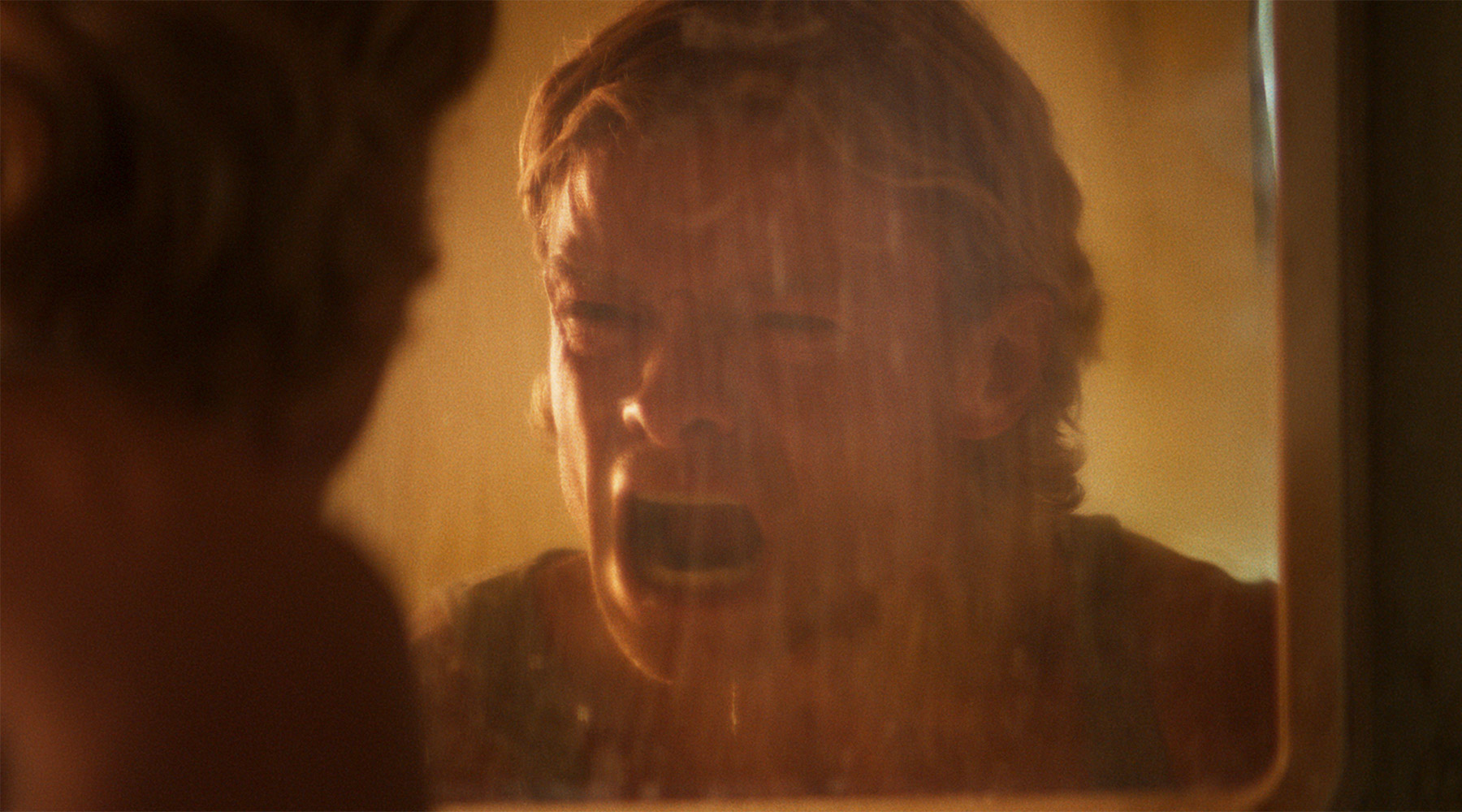
Tom Rhys Harries as Matt Hagen in DC Studios' Clayface, a Warner Bros. Pictures Release.
Q: Gotham feels like a character in its own right. How did you approach building that world?
James Watkins: My production designer, Grant Armstrong, started working with me right at the beginning. We wanted to ask: If Gotham is a character, how does it reflect what has happened to Matt?
We looked at New York street photography from the ’70s and movies from the 1930s. We wanted Gotham to feel like an oppressive place with lots of dark corners. We also used older lenses to take away some of the plasticity you can sometimes get with digital photography. We wanted a dirtiness to it, a kind of dirty romance.
Gotham looms over the characters. There’s a claustrophobia to it, with these canyons of buildings. We worked hard at that larger level, but also at a very detailed level. In the nightclub, for example, the wallpaper has the texture of meat, like a steak.
When you have the opportunity to work in Gotham, you can think about everything, from the color of the Gotham police uniforms to the fonts on the police vehicles. It’s such a rich tapestry.
Q: One thing that stands out is that this isn’t a story about superheroes or billionaires. It’s about an ordinary person living in Gotham.
James Watkins: It’s one person’s story within that world. It’s not a superhero movie in that way. It’s a Super-Villain story. But, to me, the more you relate to these characters as real people, the more you relate to the horror.
Q: Tom, what connected you to Matt Hagen?
Tom Rhys Harries: I think the thing that’s interesting about Matt is he’s always just trying to be good. Despite all these challenges that have been thrown against him, he has admirably made a life for himself, and that’s brutally taken away from him.
Throughout the whole film, he’s just trying to regain his life. I think there’s an inherent relatability to that. If you had made a life for yourself and then that was taken away from you, how far would you go? And what would you do to regain that life?

(L-R) Tom Rhys Harries and Director James Watkins on the set of DC Studios' Clayface, a Warner Bros. Pictures Release. Behind-the-scenes Day 38 of production, Oct 17, 2025.
Q: Matt makes increasingly extreme choices throughout the film, but he remains surprisingly sympathetic.
Tom Rhys Harries: It gets pretty primal pretty quickly. It’s ultimately about loss of identity and how desperate any of us would get if we were stripped of our identity. It’s fertile psychological ground.
James Watkins: Matt is just trying to reclaim the life that has been taken from him through conventional means. But, as Jim mentioned earlier, he’s in Gotham City, so that’s not going to work.
Ultimately, he reaches a breaking point where he leans into it. There’s a psychological shift, and then he decides, “I’m going to seek retribution against those who wronged me.” There’s also a gradual enjoyment of that power.
That relatability up front is really important. Matt is an actor, so his face is his instrument. If he were a violinist, it would be like someone smashing his hands. All he wants is to get back the life that he worked really hard to secure.
Q: There’s a lot of darkness in the story, but there’s humor throughout as well.
James Watkins: The more darkness you have, the more light you want to have. In life, people are funny. For me, any film should have humor, and we really leaned into it. There are some really funny moments in the movie, deliberately.
It’s like a roller-coaster ride. There are ups and downs. You want to get people leaning in, and then you want to throw them back. The humor warms you to the characters and settles you, and then you can sucker-punch people.
Q: Was there a particular scene that captures the tone of the film?
James Watkins: There’s a scene on an airplane that you see in the trailer. Matt has an issue with his eye that he needs to resolve, so he goes into the airplane bathroom. I have a fear of turbulence, and I wanted to use things that people can relate to.
Not only does Matt have to deal with what’s happening to his eye, but there’s also horrendous turbulence. We had the whole plane on a gimbal, and Tom had prosthetic makeup over his eye that he had to work with while the set was moving.
It’s one of my favorite scenes in the movie. When you watch it with an audience, you see people literally squirming in their seats.
Tom Rhys Harries: At one point, I thought I had figured out a way to get the real scissors underneath the prosthetic. If I could get them just on my eyelid, rather than in my eye, I thought, “I can cut this.” James was leaning in, saying, “You can do this,” while the assistant directors were losing their minds and saying, “No, no, no, no, no. It’s going to be an insurance claim.”
Q: The film explores transformation in a very literal sense. Was that part of its appeal?
James Watkins: Matt’s transformation is physical, but his internal struggle was also a really interesting way into the story: "Are you controlled by your emotions, or can you decide what you do?"
There’s also the experimental science behind the process he goes through at Caitlin Cole’s laboratory. It’s a kind of five-minutes-into-the-future science that speaks to what we’re all thinking about now: nanotechnology, AI and biomedicine.
We explore the future possibilities of that technology for good, but also its risks, dangers and fears.
Q: Jim, what do you think has allowed Clayface to endure for so long as a Batman villain?
Jim Lee: What I love about the character is that I think he really showcases the strength of Batman and his entire rogues gallery, and why they have remained so popular and stood the test of time.
These are characters who are very much like you or me. Batman is an everyday person. He has no superpowers, but he pushes himself to become the best version of himself. When you look at the villains, they are also very much like you and me. They are everyday people who typically have one fateful, very bad day.
If you think about Batman, he had a very bad day. His parents were murdered in front of his eyes, and that galvanized him to become a hero rather than a villain. The rest of his rogues gallery also had similar experiences, but out of that, they chose to become villains, often because of circumstances outside their control.
That’s what makes Clayface compelling. He’s clearly a villain in the comic books, but his origin is often quite tragic in all the different iterations.
Q: What do you hope audiences take away from the film?
James Watkins: The film has a real heart to it. There’s an emotional story. Guillermo del Toro always says the best horror films have heart and horror, and that’s really important to me.
I don’t want to make a film that’s just clockwork: “Okay, we jump-scared you there,” without any emotional value. I want it to get under your skin and for you to care about the characters.
Tom does an amazing job of getting you to care about Matt Hagen. Once you care about him, we take you to some very dark places.
DC Studios’ horror thriller Clayface hit theaters globally on October 21 and releases in the US on October 23. Get your tickets today.